
 0
 0
Morocco has taken another major step in developing its healthcare system with the inauguration of the Mohammed VI International University Hospital Complex in Dakhla. Covering 470,000 square metres, the facility brings together specialized medical care, healthcare education, research and innovation, with the ambition of strengthening healthcare provision in the country’s southern provinces and positioning Dakhla as a university and healthcare hub open to Africa.
The development of African healthcare systems requires investments that bring specialized medical services closer to communities, train future healthcare professionals and promote scientific research. In Morocco, a new facility reflects this ambition.
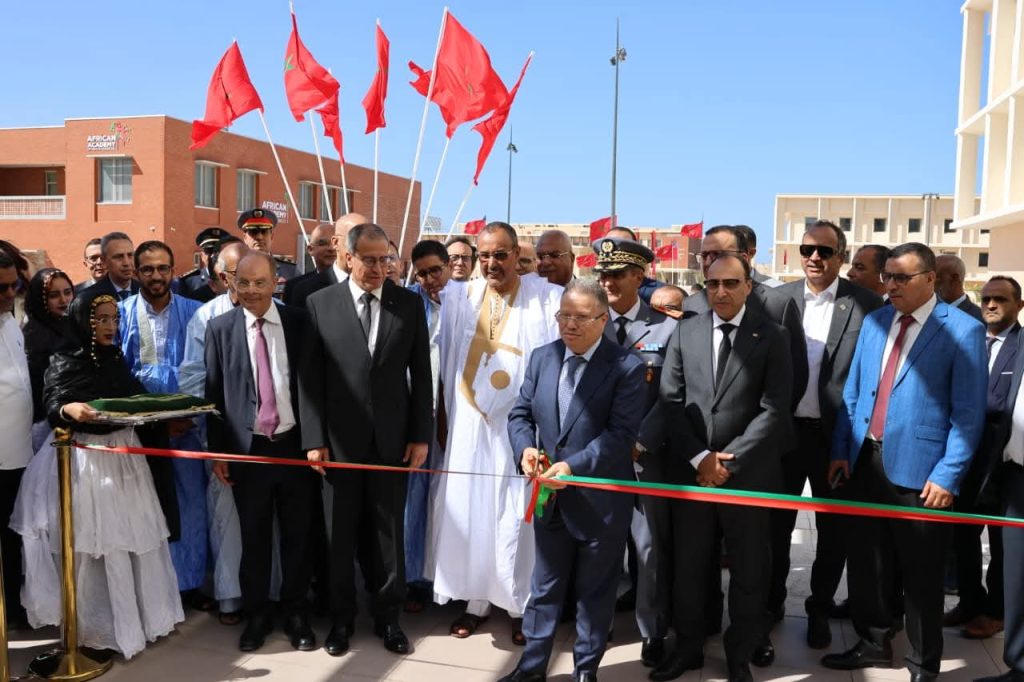
On Wednesday, November 18, 2026, under the High Instructions of His Majesty King Mohammed VI, may God assist Him, the Mohammed VI Foundation for Science and Health (FM6SS) inaugurated the Mohammed VI International University Hospital Complex in Dakhla.
The ceremony was chaired by Mr Youns Bjijou, Minister of Health and Social Protection, marking a new milestone in the expansion of the Foundation’s university hospital model. Beyond its institutional significance, the project carries a major ambition: improving access to healthcare, developing medical expertise and contributing to Morocco’s scientific influence across Africa.
A Major Investment in Morocco’s Healthcare Infrastructure
Covering a total area of 470,000 square metres, the Mohammed VI International University Hospital Complex in Dakhla is built around two main components: a university hospital and a campus dedicated to health sciences.
This integrated approach brings together three essential pillars of a high-performing healthcare system: patient care, professional training and scientific research.
For Morocco’s southern provinces, the facility represents an important step towards strengthening access to specialized healthcare. It is also part of a broader territorial development strategy aimed at bringing medical services closer to communities and reinforcing regional healthcare capacity.
A 259-Bed University Hospital Offering 28 Medical Specialties
At the heart of the complex, the Mohammed VI International University Hospital in Dakhla has a capacity of 259 beds and offers 28 medical and surgical specialties organized into 11 centres of excellence.
The hospital has an announced capacity to provide care to 226,000 patients annually, highlighting the scale of healthcare needs the new facility is designed to address.
Its medical services aim to improve access to specialist consultations, diagnostic examinations and medical and surgical treatment.
The facility is therefore expected to play an important role in strengthening patient care pathways and contributing to a more balanced distribution of healthcare resources across the region.
Centres of Excellence to Advance Specialized Medical Care
The 11 centres of excellence are a key component of the hospital’s structure. They reflect the ambition to develop specialized medical services supported by diverse clinical expertise and appropriate technical facilities.
At a time when access to specialized healthcare remains a major challenge for many African communities, the development of university hospitals represents a strategic response to growing healthcare needs.
The challenge will be to ensure the availability of qualified professionals, maintain high standards of care and guarantee continuity of services for patients.
Training the Healthcare Professionals of Tomorrow: Dakhla’s University Ambition
A high-performing healthcare system relies on more than hospital infrastructure. It also depends on the availability of qualified professionals, the quality of their training and their ability to adapt to developments in medicine.
With this in mind, the complex includes Mohammed VI University of Sciences and Health in Dakhla, which will have the capacity to accommodate up to 3,000 students.
The campus brings together several academic institutions:
– A Faculty of Medicine;
– A School of Engineering in Health Sciences;
– A Faculty of Nursing Sciences and Health Professions.
This range of programmes reflects a comprehensive approach to healthcare education. Doctors, nurses, engineers and other healthcare professionals are all essential to the effective functioning of health facilities and the improvement of care quality.
A Simulation Centre Bridging Medical Education and Clinical Practice
The university campus also includes a 1,800-square-metre medical simulation centre.
Medical simulation now plays an increasingly important role in healthcare education. It allows students to develop technical skills, work as part of multidisciplinary teams and practise managing complex clinical situations in a safe learning environment.
By integrating this facility into its campus, Mohammed VI University of Sciences and Health in Dakhla aims to strengthen the connection between theoretical learning and clinical practice.
This close relationship between the university and the hospital is essential to preparing future healthcare professionals for real-world clinical challenges and improving patient safety.
Dakhla: An Emerging Healthcare and Academic Hub Open to Africa
Beyond its regional significance, the Mohammed VI International University Hospital Complex carries a broader continental ambition.
By combining specialized healthcare, university education and scientific research, the facility could contribute to strengthening professional exchanges and partnerships between African healthcare institutions.
Developing human resources remains one of the major challenges facing healthcare systems across the continent. Shortages of qualified professionals, regional disparities in access to specialized care and growing needs in research and innovation all call for sustainable, structural solutions.
In this context, the development of university hospital centres represents a strategic opportunity to strengthen national healthcare capacity and promote regional cooperation.
Dakhla therefore aims to reinforce its position as a meeting point for professionals in medicine, higher education and scientific research across Africa.
This ambition is also aligned with the Royal Vision and Morocco’s advanced regionalization policy, which seeks to promote balanced territorial development and improve access to essential services.
A Symbolic Inauguration Marking Morocco’s 71st Independence Anniversary
The inauguration ceremony took place on Wednesday, November 18, 2026, coinciding with the celebration of Morocco’s 71st Independence Day.
It was chaired by Mr Youns Bjijou, Minister of Health and Social Protection, in the presence of Mr Ali Khalil, Wali of the Dakhla-Oued Eddahab region and Governor of Oued Eddahab Province.
Elected officials, institutional representatives and several civilian and military dignitaries also attended the event.
The inauguration reflects the country’s commitment to making healthcare investment a driver of territorial development, skills enhancement and healthcare system modernization.
Beyond Infrastructure: The Challenge of Access to Healthcare
The construction of a university hospital of this scale represents an important achievement. However, its real impact will also depend on its ability to address the everyday healthcare needs of local communities.
The affordability of medical services, the availability of qualified professionals, the quality of care, continuity of services and the integration of research into medical practice will all be decisive factors.
Modern infrastructure alone is not enough. It must translate into tangible improvements in healthcare access, reduced inequalities and better health outcomes for communities.
For Morocco, the challenge will therefore be to transform this investment into lasting benefits for patients, students and the wider regional healthcare ecosystem.
Investing in Healthcare Means Investing in Africa’s Future
With the Mohammed VI International University Hospital Complex in Dakhla, Morocco is adding a major facility to its healthcare and higher education landscape.
By bringing together a 259-bed hospital, university programmes designed to accommodate 3,000 students and facilities dedicated to medical training, the project illustrates an integrated approach to healthcare development.
Its ambition extends beyond regional boundaries: to strengthen professional skills, encourage research and expand opportunities for healthcare cooperation across Africa.
The future of healthcare in Africa is being built not only in hospitals, but also in universities, laboratories and institutions where medical knowledge is developed and shared.
Investing in infrastructure, training talent and bringing healthcare closer to communities are essential steps towards building African health systems that are more accessible, efficient and resilient.
Afiyafrica – Revealing, celebrating and amplifying the light of healthcare in Africa.


About Author



OTHER ARTICLES
16 Days of Activism Against Gender-Based Violence: Making Justice and Survivor Protection a Priority
Zambia Launches 2026 world antimicrobial resistance awareness week
Ebola in the DRC: Women on the Frontline – Why Protecting Them Is Essential to Containing the Outbreak