

 1
1
 0
0
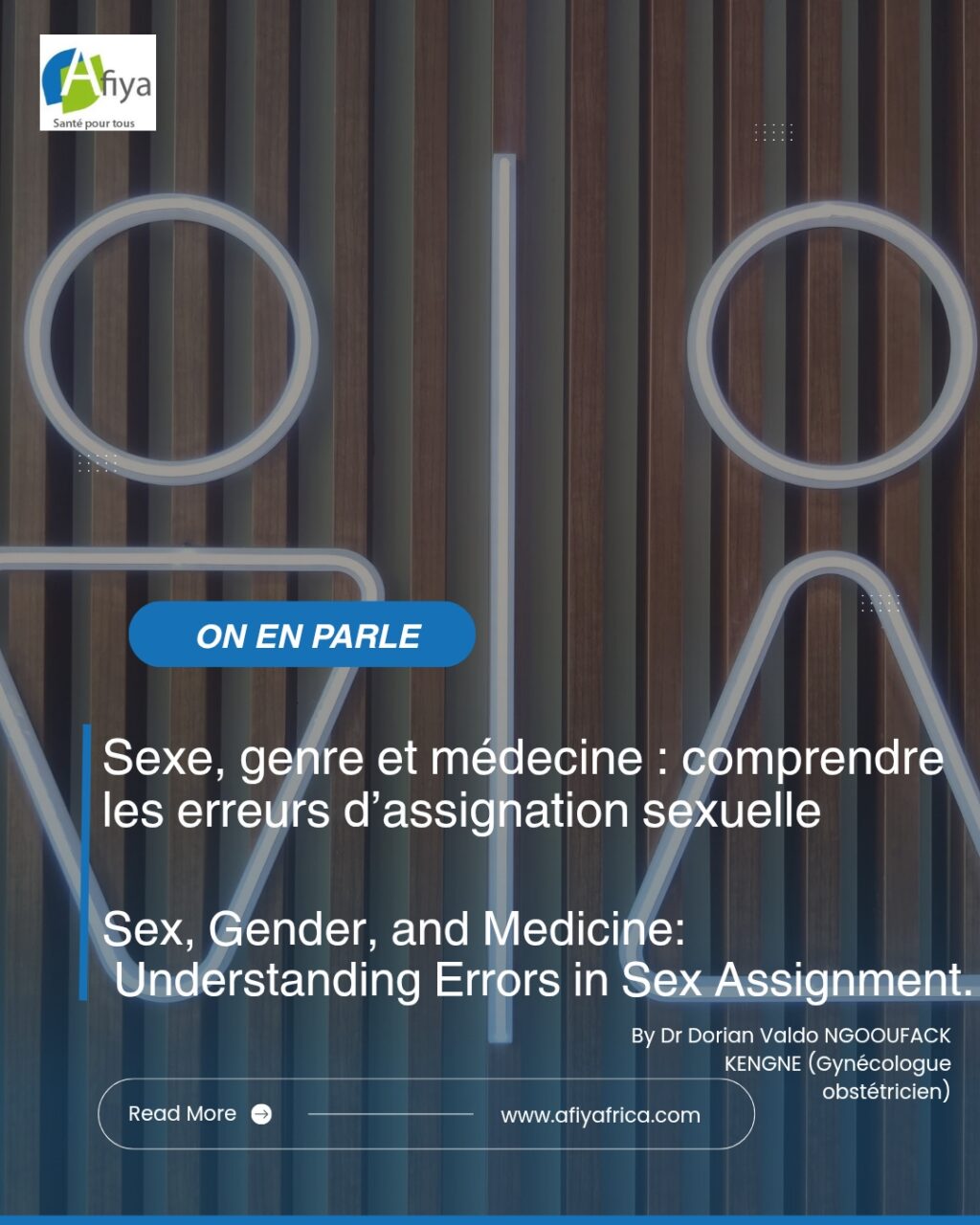
Being Trapped in the Wrong Body: A Medical Reality That Is Sometimes Little Known or Even Ignored
“I am a girl in a man’s body”—an expression we used to hear when we were younger, one that made us smile because, from our point of view, it seemed like a whim or a fantasy on the part of the person saying it. It never occurred to us that the author of this sentence might actually be right. And how could it have been otherwise? We were raised with a very clear vision of the world, especially when it came to gender: either you are a boy or you are a girl. Any other situation was undeniably seen as a deviation, or even a perversion.
However, as I progressed through my medical studies, my perspective on this issue evolved, because I learned that there are physiological situations in which an individual can indeed be trapped in a body that does not truly correspond to who they are. In this article, we will look at some of these particular conditions.
At birth, the maternity team examines the newborn to ensure that the baby is healthy and that there are no malformations. It is at that moment that the sex is examined and the child is declared to be either a girl or a boy. This is the moment when everything is decided. The sex assigned to the child will generally remain the same throughout their entire life. You can therefore understand where the situation can become complex.
Indeed, there are children whose sex appears to be female even though genetically they are male, and conversely, there are children whose sex appears to be male even though they have a 100% female genotype. As they grow up, these children are raised as girls (or boys), while inwardly they feel that they belong to the opposite sex. This situation sometimes leads to significant suffering that is ignored, and the child may be stigmatized because their distress is thought to be purely linked to deviant behavior.
So, what are these conditions that can lead to errors in sex assignment?
The first condition we will discuss is androgen insensitivity syndrome, formerly known as “feminizing testicular syndrome.” This is a rare genetic condition in which embryos with male genetic material are not sensitive to male sex hormones. As a result, the future baby’s male genital organs do not develop, and the testes remain intra-abdominal. Consequently, the baby is born with genitalia that strongly resemble female genitalia and grows up with a feminine appearance, to the point of developing breasts, feminine body contours, and a high-pitched voice at puberty. The diagnosis is most often made during the investigation of primary amenorrhea. In this situation, however, the children grow up with a female gender identity, and there is generally no discordance between psychological sex, administrative sex, and social sex. The shock comes rather with the announcement of the diagnosis: all her life she has felt like a woman, and she is suddenly told that genetically she has male characteristics.
Another particular situation is pseudo-hermaphroditism. Pseudo-hermaphroditism is a disorder of sexual differentiation in which an individual has gonads (ovaries or testes) of one sex, but external or internal genital organs resembling those of the other sex. We distinguish between male pseudo-hermaphroditism and female pseudo-hermaphroditism.
In male pseudo-hermaphroditism, the karyotype is 46,XY (male), the gonads are testes, and the external genitalia are poorly differentiated (small penis, divided scrotum) or feminized, with incomplete male internal structures.
In female pseudo-hermaphroditism, the karyotype is 46,XX (female), and the gonads are ovaries. There is virilization of the external genitalia, with an enlarged clitoris (resembling a penis) and fused labia majora (resembling a scrotum).
It is important to remember that these conditions are relatively rare, but they deserve to be known. It is essential to keep an open mind and not to stigmatize what we do not understand. Reality can sometimes be surprising, beyond our personal beliefs and assumptions.
Dr. Dorian Valdo NGOOUFACK KENGNE


About Author



OTHER ARTICLES
March 8, 2026 — Women’s Right to Health: A Struggle Still Unfinished in Africa
Zambia : U.S Based Specialized Cardiac Surgeons in the Country to Perform Complex Open Heart Surgeries
AFRICA & HEALTH TODAY Continental Public Health Monitoring