
 0
0
 0
0
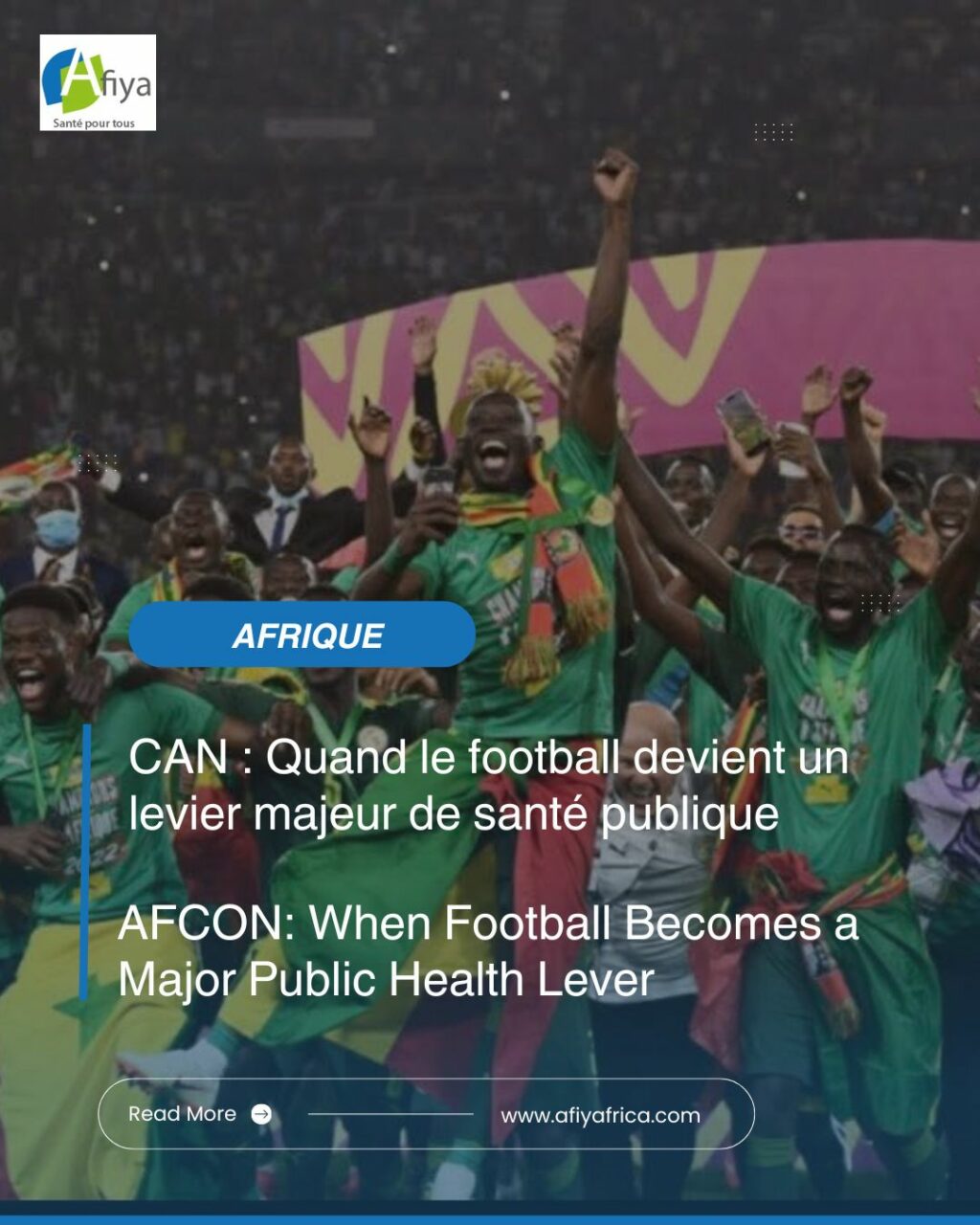
With each edition of the Africa Cup of Nations (AFCON), the entire continent vibrates to the rhythm of football. Beyond passion, sporting rivalries, and technical prowess, AFCON also represents an exceptional opportunity to promote health among millions of Africans. Indeed, sport—and football in particular—is now recognized as a powerful tool for social cohesion and for promoting physical and mental well-being.
Football: An Ally Against Non-Communicable Diseases
In Africa, non-communicable diseases (NCDs)—including hypertension, diabetes, obesity, cardiovascular diseases, and others—are increasing at an alarming rate. Yet regular physical activity, even at a moderate level, can significantly reduce these risks.
AFCON provides an opportunity to remind us that:
30 minutes of physical activity per day reduce cardiovascular risk,
Sport improves stress management, sleep, and weight control,
Regular physical activity strengthens the immune system.
Amateur football—accessible and popular—can thus become a community shield against sedentary lifestyles, particularly among young people and urban adults.
Mental Health: When Sport Also Heals the Mind
AFCON is not only a sporting competition; it is a collective emotional event. It promotes:
A sense of belonging,
Reduced social isolation,
Moments of shared joy, which are essential for mental health.
In an African context marked by economic stress, conflicts, youth unemployment, and social trauma, sport appears as a space for psychological resilience, particularly for young adults.
African Athletes: Performance, Prevention, and Longevity
Professional players competing in AFCON are also health role models. Their preparation highlights key issues:
Prevention of muscle and joint injuries,
The importance of appropriate nutrition,
Medical monitoring, recovery, and healthy lifestyles.
These factors remind us that sustainable performance is built on a balance between training, rest, and care—a message that can be applied to mass participation in sport.
AFCON and Health Awareness: A Unique Platform
Major African sporting competitions are also ideal platforms to:
Raise awareness about HIV/AIDS, malaria, and hepatitis,
Promote vaccination, hygiene, and reproductive health,
Encourage early screening for chronic diseases.
Integrating health messages into stadiums, media, and fan zones makes it possible to reach populations that are sometimes far from healthcare facilities.
For a Healthier Africa, Let’s Play as a Team
On the occasion of AFCON, Afiyafrica calls for sport to become a pillar of public health policies: community-based infrastructure, school sports, community supervision, and the inclusion of women and people with disabilities.
Because beyond the trophy, the greatest victory remains that of a more active, more resilient, and healthier continent.
Afiyafrica – Informing to better prevent, acting to live better.


About Author



OTHER ARTICLES
Ten ambulances and medical equipment strengthen emergency care in The Gambia
Afiya List 2025 : 25 personalities who made an impact on health in Africa in 2025
World Malaria Day: Real Progress, but the Battle Is Far from Over